


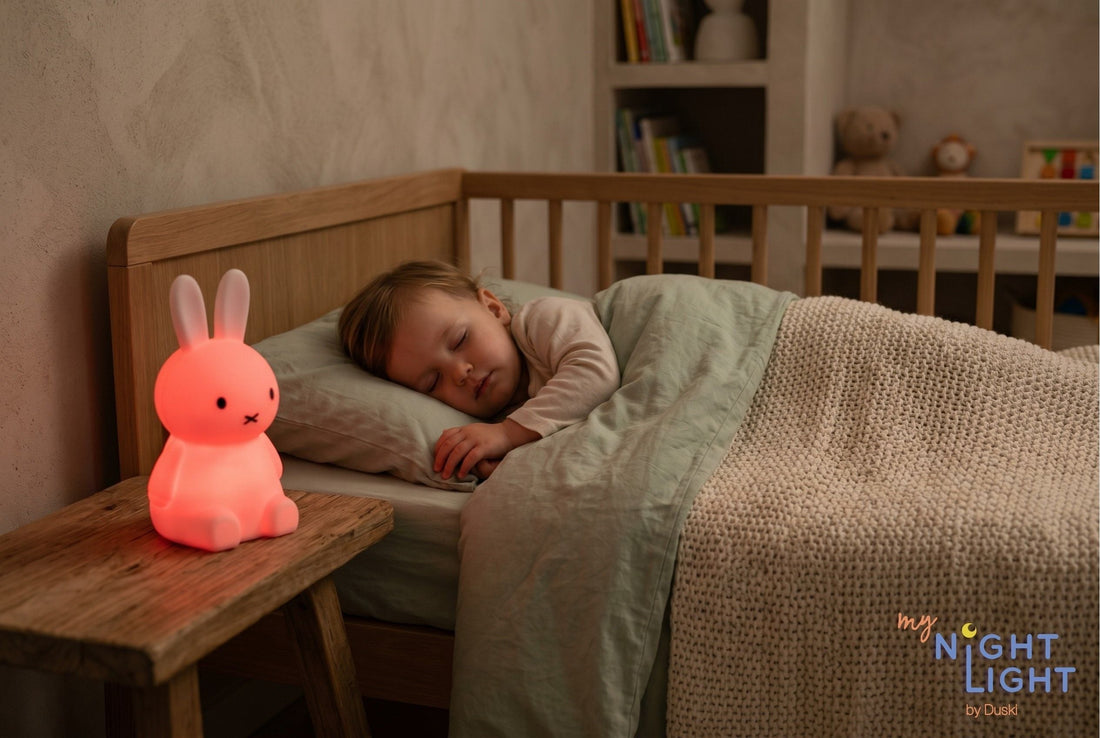
Does your child struggle to wind down when the sun goes down? For many families, bedtime isn't just a routine, it's a battle against overstimulation. If your little one has a sensitive sensory system, a standard lamp can feel like a searchlight, and a dark room can feel overwhelming.
I remember talking to a friend whose son would have a meltdown every time she turned off the main bedroom light. To him, the "click" of the switch was the start of a scary, pitch-black void. We eventually realised that he didn't just need a light; he needed the right kind of light.
That is where sensory-friendly night lights come in. These aren't your average department store plug-ins. They are designed to soothe the nervous system, protect sleep hormones, and create a "safe zone" for rest.
What Makes a Night Light Sensory-Friendly?
Not all light is created equal. If you’ve ever felt a headache coming on under harsh office fluorescents, you know how much lighting impacts your mood. For kids with Autism, ADHD, orSensory Processing Disorder (SPD), this effect is magnified
A truly sensory-friendly light focuses on three things: stability, colour, and control.
1. No More Flickering
Many cheap LED bulbs have a "flicker" that is invisible to most adults but highly distracting or even painful to children with a sensitive visual system. Sensory-friendly options use high-quality, flicker-free technology to keep the light steady and calm.
2. The Power of Red Light
Did you know blue light is the enemy of sleep? It tells the brain that it’s morning, which stops the production of melatonin (the "sleepy" hormone). Red light for sleep is the gold standard because it has the lowest impact on our internal clocks. It provides enough visibility for a midnight bathroom trip without waking up the brain.
3. Adjustable Brightness for Kids
Every child is different. Some need a very dim glow in the corner, while others feel safer with a brighter "reading level" light while they fall asleep. Having adjustable brightness for kids allows you to customise the room to their exact comfort level.
How Lighting Impacts the Calming Sleep Environment
Creating a calming sleep environment is like setting the stage for a performance. If the lights are too bright, the body stays in "alert mode".
By using autism lighting solutions, parents can help their children transition from the high-energy activities of the day to the quiet needs of the night. Soft, diffused lighting helps lower cortisol levels (the stress hormone) and signals to the nervous system that it is time to relax.
Benefits of Soft Sensory Lighting:
Reduces Anxiety: A gentle glow eliminates scary shadows in corners.
Encourages Independence: If they wake up at night, they can see enough to self-soothe without calling for you.
Improves Sleep Quality: By avoiding blue light, your child stays in a deeper sleep state for longer.
Direct Answers: What Parents Want to Know
Are night lights good for children with autism?
Which colour is best for a nursery night light?
Warm tones like orange, amber, and especially red are best. Avoid cool whites and blues, as these mimic daylight and can keep your baby awake.
How bright should a night light be?
It should be just bright enough to see the outline of the room. If you can clearly read a book from across the room, it is likely too bright for optimal sleep.
Tips for Choosing the Best Night Light
When you are looking for nursery night lights or lamps for older kids, keep these "must-haves" in mind:
Cool to the Touch: Kids love to carry their lights. Ensure it’s an LED that won’t get hot.
Timer Functions: A light that stays on for 1 hour and then fades out is great for kids who only need help falling asleep.
Remote Control: Being able to dim the light from the doorway without stepping into the room (and potentially waking them up!) is a total game-changer for parents.
Durable Materials: Look for "squishy" silicone or sturdy, BPA-free plastics that can handle being dropped.
Why We Love Duski Dream Lights
If you are looking for a light that checks every single one of these boxes, look no further than the Duski Dream Night Lights.
We’ve seen how much of a difference the right environment makes, and Duski has truly mastered the balance between fun design and sensory science. These aren't just lamps; they are sleep companions.
The Duski Dream range features 13 different colours, including that essential deep red for sleep. They come with a remote that lets you adjust four levels of brightness, so you can go from a bright "storytime" setting to a "dim overnight" glow with one click. Plus, the designs are beautiful, from sleek modern shapes to adorable animals that fit perfectly into any ADHD bedroom ideas you might be putting together.
What we love most is the "set and forget" timer. You can set it to turn off after your little one has drifted off or leave it on all night if they need that constant reassurance.
Create Your Peaceful Bedtime Today
Stop struggling with bedtime meltdowns and start building a space where your child feels safe and sleepy. A sensory-friendly night light is one of the easiest, most effective tools you can add to your parenting toolkit.
Ready to transform your child's room into a sleep sanctuary?
Shop the Duski Dream Night Lights Collection here and find the perfect glow for your home!