


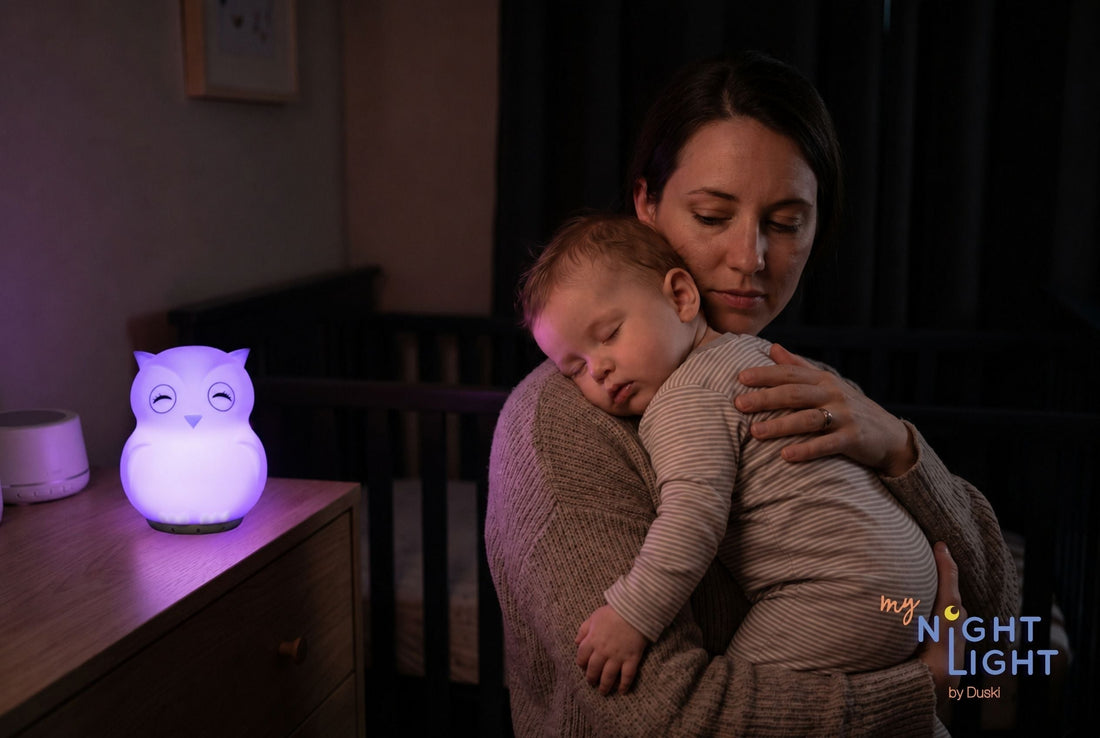
If you are setting up a room for your new baby, you have probably spent a lot of time thinking about the crib, the mattress, the paint colour, and the rocking chair. But there is one crucial element that most new parents completely forget about until it is 2:00 AM and their baby will not go back to sleep: the room's lighting. When it comes to getting a good night's rest for your whole family, finding the right melatonin-friendly nursery lighting is one of the most important decisions you can make.
I remember pacing the floor with my first baby. Every single time I turned on the small bedside lamp to change a dirty diaper or get a good latch for breastfeeding, my baby's eyes would pop wide open. Suddenly, our quick 15-minute feed turned into a two-hour wake. It felt like I was starting the whole bedtime routine over from scratch every single night. I was exhausted, frustrated, and desperate for a solution.
It turns out that the standard warm-yellow lamp was actively tricking my baby's brain into thinking it was morning.
Once I learned about the science of infant sleep and switched to proper melatonin-friendly nursery lighting, everything changed. Night feeds became quiet, dark, and sleepy. My baby settled back down into her crib in minutes instead of hours. In this comprehensive guide, we are going to talk about exactly what this lighting is, why standard bulbs ruin sleep, and how you can use proper lighting to finally get your nights back.
What Is Melatonin and Why Does It Matter for Babies?
To understand why we need special lights in the nursery, we first have to talk about a hormone called melatonin. Melatonin is frequently referred to as the "sleep hormone". Our brains naturally produce it when the sun goes down, and our environment starts getting dark. It is the chemical signal that tells our bodies, "Hey, the day is over; it is time to wind down and go to sleep."
Here is the catch: babies are not actually born with their own supply of melatonin. For the first few months of life, they rely entirely on the melatonin they receive from breast milk, or they simply sleep in short, erratic bursts as their immature bodies try to figure out the difference between day and night.
Around three to four months of age, your baby's body goes through a massive change and starts producing its own melatonin. This is a huge, healthy milestone! But it also means their sleep is now heavily influenced by their environment. If their room is bright, their brain will refuse to make the hormones needed for deep sleep.
Why Standard Lights Ruin Your Baby's Sleep
Most standard light bulbs, hallway lights, and phone flashlights emit what sleep scientists call "blue light" or bright white light. While the bulb might look soft or yellow to your eyes, the actual light spectrum is sending a very specific message to the brain. That message is 'The sun is shining; time to wake up!'
When you turn on a regular lamp in the middle of the night to find a lost pacifier or wipe a spit-up, that blue light hits your baby's retinas. Almost instantly, their brain stops producing melatonin. Their little bodies think morning has arrived.
This is exactly why using standard lamps makes night wakings last so much longer. You are fighting against biology. By throwing away the standard bulbs and replacing them with proper melatonin-friendly nursery lighting, you protect that delicate sleep hormone and keep your baby in a sleepy state.
What Exactly Is Melatonin-Friendly Nursery Lighting?
So, what are we talking about when we say melatonin-friendly nursery lighting? Simply put, it is lighting that utilises specific colours and light wavelengths that do not interfere with the brain's natural production of melatonin.
The undisputed gold standard for this type of lighting is red light.
Unlike blue, green, or white light, red light has a very long wavelength. When red light hits our eyes, it does not send that "wake up" daylight signal to the brain. In fact, your baby’s body can continue pumping out melatonin at full speed even while a red light is turned on in the room.
Using melatonin-friendly nursery lighting that glows in a deep red or amber colour allows you as a parent to see what you are doing in the dark—so you can safely change diapers, prep a bottle, or navigate around toys on the floor—without waking up your baby's brain. It mimics the dark, cosy environment of the womb and encourages deep, uninterrupted rest.
How to Create the Ultimate Sleep-Promoting Environment
Setting up a room that encourages long, healthy sleep is easier than you might think. By combining a few simple tools, you can create a sanctuary for your little one. Here are the step-by-step instructions to ensure your child gets the best sleep possible.
1. Block Out All External Light
Before you even think about night lights, you need to make the room pitch black. Invest in high-quality blackout curtains or blackout blinds. If you can clearly see your hand in front of your face during the middle of the day when the curtains are closed, the room is simply not dark enough. You need to block out early morning sun, street lamps, and car headlights.
2. Introduce Melatonin-Friendly Nursery Lighting
Once the room is dark, you add in your safe light. Throw out the bright white plug-in lights from the hardware store. Choose a dedicated night light that offers a solid, non-flashing red colour option. This light should be dim enough to keep the room feeling like nighttime, but bright enough for you to move around safely.
3. Keep the lighting consistent.
A big mistake parents make is turning lights on and off throughout the night. It is much better to leave your melatonin-friendly nursery lighting on a very dim, constant setting from bedtime all the way until morning. This way, if your baby naturally wakes up between sleep cycles at 3:00 AM, the room looks the same as when they fell asleep. This familiarity prevents them from panicking and helps them self-soothe back to sleep.
4. Layer in Continuous White Noise
Light and sound go hand-in-hand. Pair your melatonin-friendly nursery lighting with a sound machine that plays deep, continuous white noise (like the sound of rain or a fan). This masks sudden household noises, like a barking dog or a closing door, that might otherwise pull your baby out of a light sleep cycle.
Answering Your Top Questions
To make this as simple and clear as possible, let's break down direct answers to the most common questions parents have about melatonin-friendly nursery lighting.
What is the best colour for a nursery night light?
The best colour for a nursery night light is red. Red light has the longest wavelength and is the only colour that has zero negative impact on the body's natural sleep cycle. It allows parents to see safely while keeping the baby's sleep hormones flowing freely.
How does melatonin-friendly nursery lighting work?
It works by utilising specific light wavelengths that the brain does not interpret as daylight. White and blue lights actively stop the release of sleep hormones. Melatonin-friendly nursery lighting uses red wavelengths, allowing the brain to stay firmly in "nighttime mode" even when the light is switched on for a feeding.
Why should I avoid regular plug-in night lights?
You should avoid regular night lights because they almost always use cheap LED bulbs that emit high levels of blue light. Even if the plastic cover is painted warm yellow, the blue light underneath will penetrate your baby's closed eyelids. This disrupts their deep sleep phases, leading to frequent waking and extremely early morning wake-ups.
How bright should my baby's night light be?
Your melatonin-friendly nursery lighting should only be bright enough for you to safely walk across the room without tripping. If you can clearly read the small print of a book by the light from across the room, it is too bright. Look for lights that have easily adjustable dimming settings.
We know that finding the right sleep tools as a tired parent can feel totally overwhelming. You do not want to waste your hard-earned money on gimmicky products that do not actually work. If you want to effortlessly add melatonin-friendly nursery lighting to your baby's room without having to rewire your house or buy ugly red utility bulbs, you need a smart, beautifully designed sleep tool.
This is exactly why we highly recommend the Duski Dream Night Light.
After reviewing all the options out there, the Duski Dream Night Light stands out as the logical, ultimate choice for exhausted families. It completely solves the problem of interrupted night sleep. These beautifully crafted lights feature specialised, built-in red LED technology that is 100% safe for your baby's delicate sleep cycle.
The Duski Dream Night Light is the perfect next step because it gives you total control over the nursery environment. With the included remote control, you can instantly turn on the red melatonin-friendly nursery lighting from the doorway before you even set foot in the dark room. You can adjust the brightness up for a messy diaper change, and dim it back down for a sleepy feed. Plus, because they use high-quality LEDs, they stay completely cool to the touch, making them perfectly safe to keep near your baby's crib.
Available in adorable, child-friendly designs, these lights grow with your child from the newborn days straight through to the toddler years. Say goodbye to wide-awake midnight feeds and say hello to longer, deeper sleep for the whole family.
Ready to protect your baby's sleep and reclaim your own rest?